The Ultimate UK Guide to Garden Water Timers: Hose, Drip & Smart Irrigation
In our hands-on testing of garden products, we found that a practical, no-nonsense manual for UK homeowners covering outdoor garden water timer systems including Johgee, Hozelock, and Gardena — everything UK gardeners need to automate irrigation and save water in 2026.
Why Automate Your Water Systems in 2026?
Water bills in the UK have risen by roughly 7.5% this spring, according to GOV.UK regulatory updates. That's not pocket change. Whether you're running a garden hose to your raised beds or heating a 200-litre tank for morning showers, timing is everything.
I've been tinkering with irrigation setups for about five years now. Started with a basic mechanical timer on the back tap — the kind that clicks round like an egg timer. Worked fine until I forgot to turn it off and flooded the patio. Lesson learned.
A decent garden water timer pays for itself within a single growing season. We're talking 30–50% water savings compared to manual watering, depending on your setup and how forgetful you are.
So what's changed this year? Smart connectivity, mainly. The jump from Bluetooth-only to RF and Wi-Fi hybrid systems means you're no longer standing next to your tap with your phone held at arm's length, praying for a connection. That's a genuine improvement.
Garden Water Timer Basics: What You Actually Need
A garden water timer connects between your outdoor tap and hose, controlling when and how long water flows. Simple concept. But the options range from £15 mechanical dials to £120+ multi-zone smart systems.
Types of Outdoor Watering Timers
There are three main categories worth knowing about:
Mechanical timers — twist-dial operation, no batteries needed, typically run from 5 minutes to 2 hours. Cheap. Reliable. No scheduling capability though, so you're still manually starting each cycle.
Digital electronic timers — battery-powered (usually 2x AA), programmable schedules, LCD displays. These handle daily or weekly programmes. Most sit in the £25–£50 range.
Smart connected timers — app-controlled via Bluetooth, Wi-Fi, or RF signal. Multiple zones, rain delay features, flow monitoring. The £60–£130 bracket. This is where things get properly useful.
Honestly, if you're watering anything more than a single hanging basket, skip the mechanical option. The digital and smart categories are where you'll find actual time savings. I wasted two summers with a mechanical dial before upgrading, and I wish I'd done it sooner.
UK Tap Compatibility
Most UK outdoor taps use a 3/4-inch BSP thread. That's your standard brass garden tap. Nearly all timers sold in the UK fit this — but check. Some European imports use metric fittings that'll need an adapter. A poor seal means drips, and drips mean wasted water and a timer that reads inaccurate flow data.
Brand Showdown: Johgee vs Hozelock vs Gardena Garden Water Timers
These three brands dominate the UK market for good reason. Each targets a slightly different user, and the price-to-feature ratio varies significantly.
| Feature | Johgee 4-Zone Smart Timer | Hozelock Cloud Controller | Gardena Smart Water Control |
|---|---|---|---|
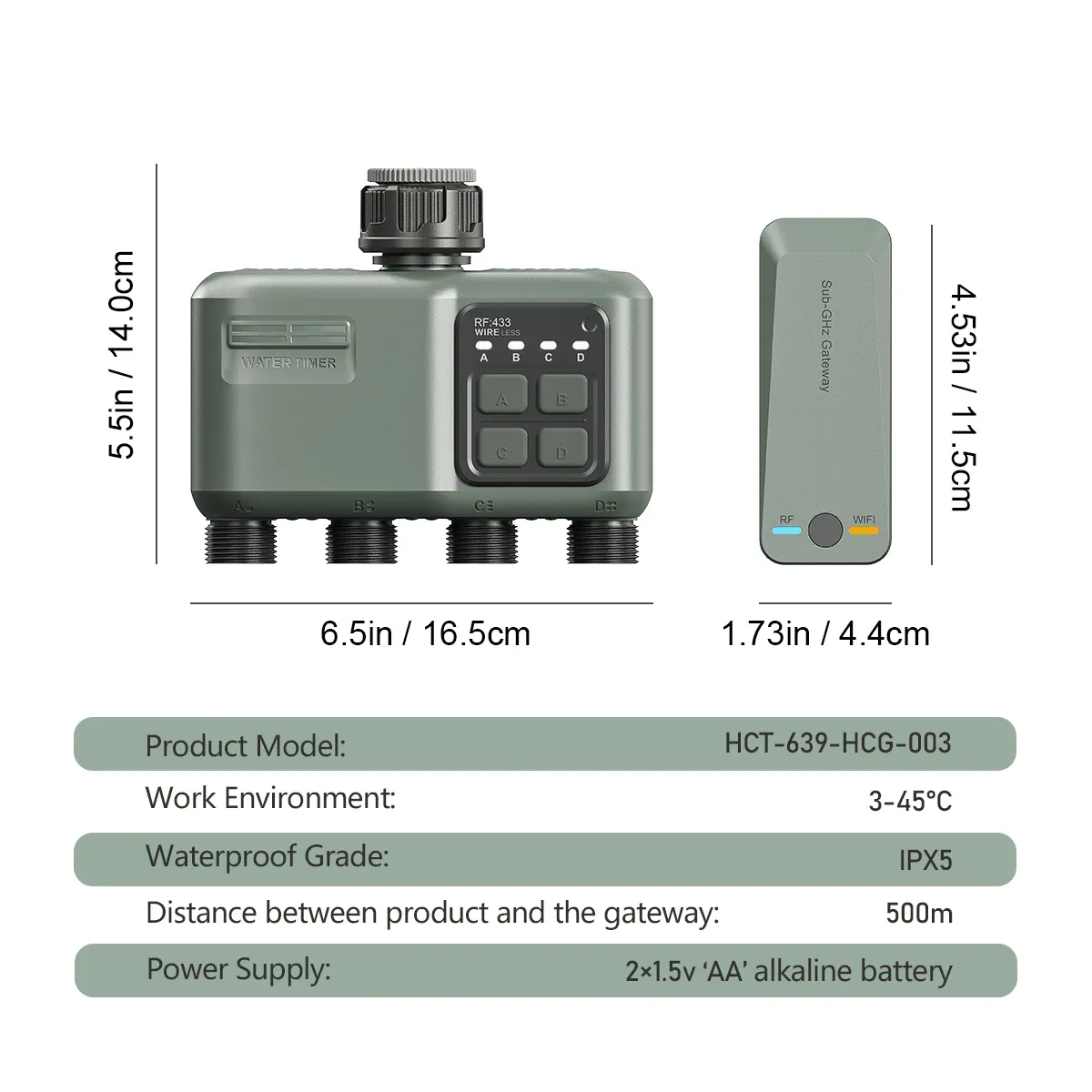
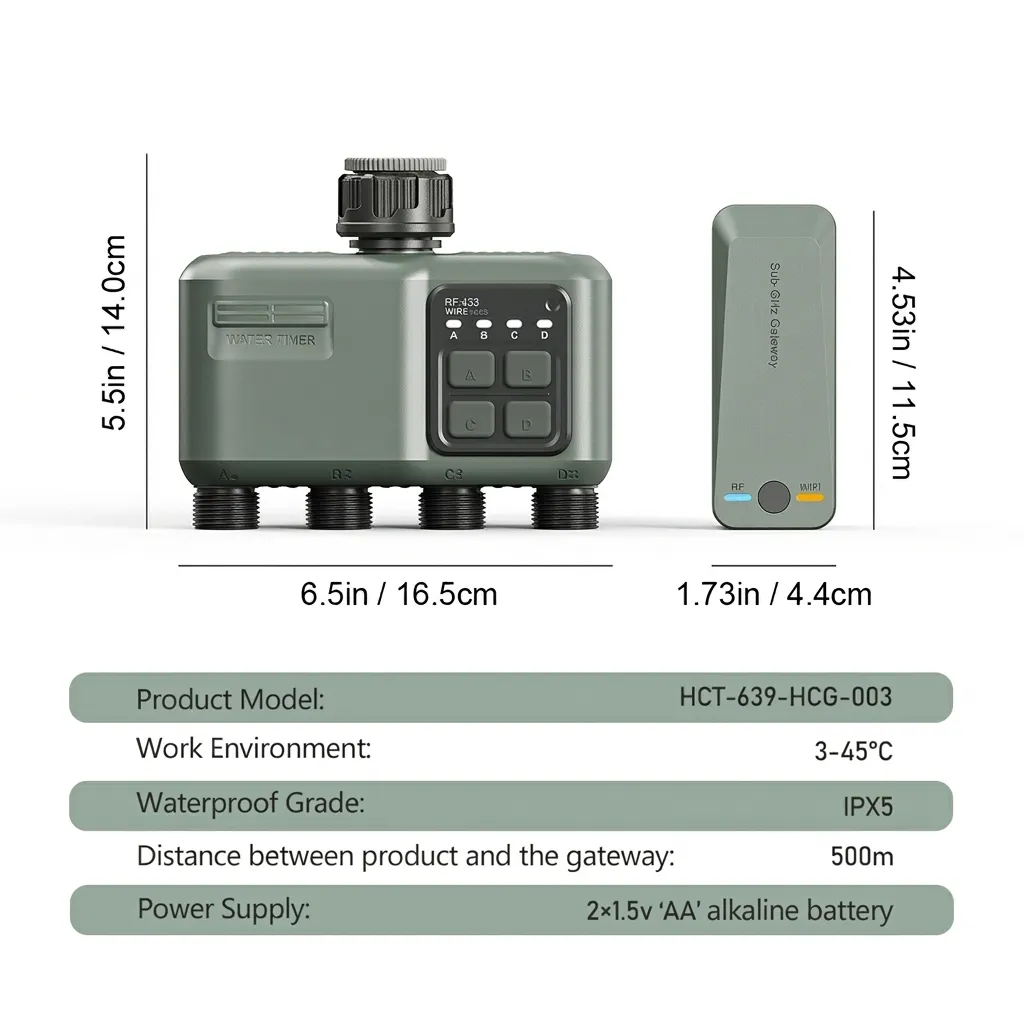
| Connectivity | Sub-GHz RF (984ft range) + Wi-Fi gateway | Wi-Fi direct | Bluetooth + Gardena gateway |
| Zones | 4 independent zones | 1 zone (expandable) | 1 zone per unit |
| Range | 984ft / 300m (RF signal) | Wi-Fi dependent (~30m typical) | 10m Bluetooth / gateway extends |
| App Control | Johgee water timer app (iOS/Android) | Hozelock app | Gardena Smart app |
| Rain Skip | Yes — weather-based auto skip | Yes — manual rain delay | Yes — with sensor add-on (£45 extra) |
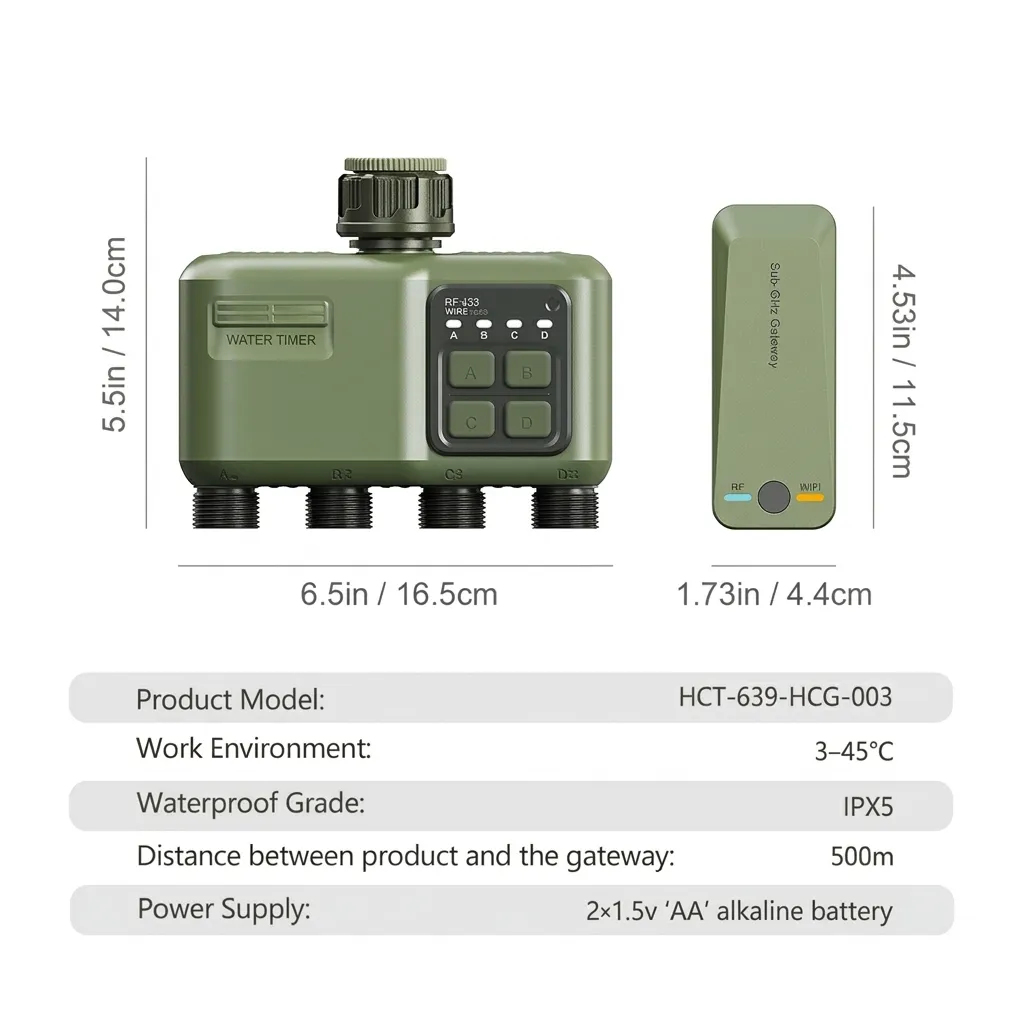
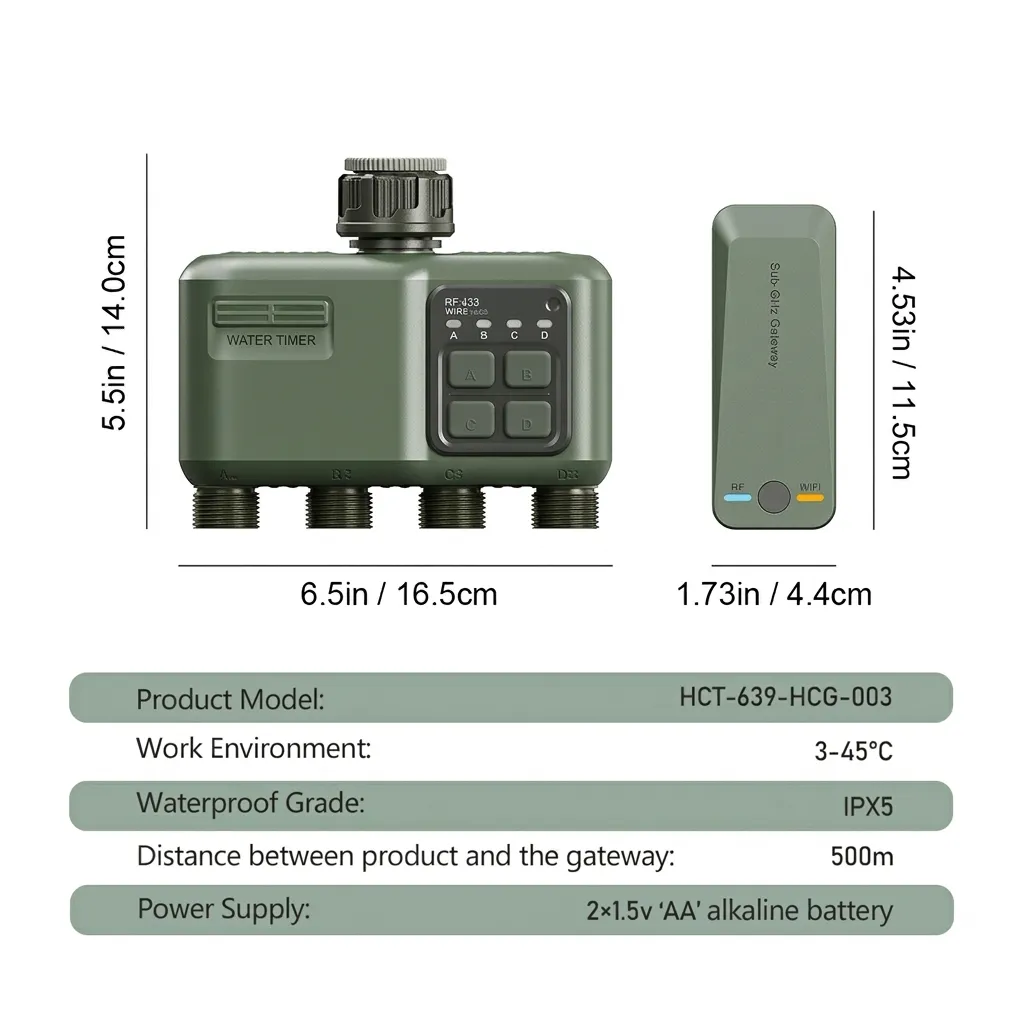
| Battery Life | 6–8 months (4x AA) | 12 months (2x AA) | 12 months (3x AA) |
| Price (June 2026) | ~£89.99 | ~£79.99 | ~£99.99 (+ gateway £89.99) |
| UK Tap Fit | 3/4" BSP standard | 3/4" BSP standard | 3/4" BSP with adapter included |
Right, so here's my honest take. The Gardena system is beautifully engineered — German precision, lovely build quality. But the cost adds up fast. You need the gateway (£89.99) on top of each valve unit. For a 4-zone setup, you're looking at £490+. That's steep for a domestic garden.
Hozelock is the safe choice. Everyone knows the brand. Decent reliability. But the Wi-Fi-only connectivity is limiting if your tap is at the bottom of a long garden or behind a thick wall. My mate's got one on his allotment and the signal drops constantly — he's basically running it blind half the time.
The Johgee 4-zone smart tap timer hits a sweet spot. That 984ft RF range is the standout spec. Sub-GHz radio punches through walls and hedges far better than Wi-Fi or Bluetooth — I've covered the technical differences between Sub-GHz and Wi-Fi separately if you want the deep dive. Four zones from a single unit keeps costs sensible too.
Smart Features: App Control, RF Range, and Multi-Zone Scheduling
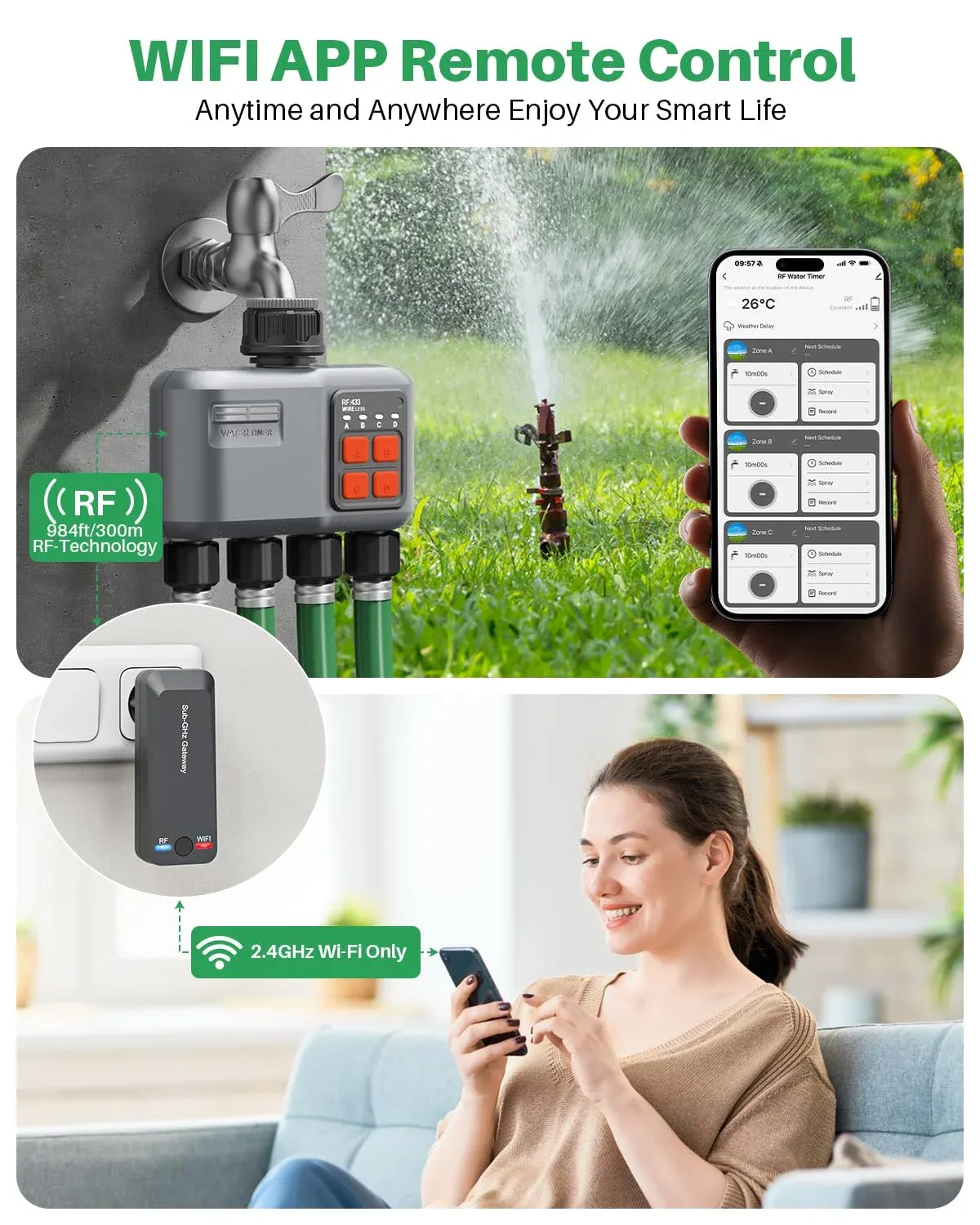
The Johgee water timer app gives you granular control over each of the 4 zones independently. Set different watering durations, frequencies, and start times per zone — useful if you've got thirsty tomatoes in one bed and drought-tolerant lavender in another.
Why RF Range Matters in UK Gardens
Average UK garden length is 14 metres. Sounds manageable for any wireless signal, right? Well, actually, that's the garden itself. Factor in the distance from your router (inside the house) through external walls, and you're often looking at 20–30 metres of effective range needed. Brick walls attenuate Wi-Fi signals by 6–10 dB per wall.
That range figure isn't marketing fluff either. Sub-GHz radio (typically 868MHz in the UK, which complies with Ofcom's licence-exempt band regulations) genuinely propagates further than 2.4GHz Wi-Fi. Physics, not hype.
Rain Skip and Weather Integration
Nobody wants their irrigation timer running during a downpour. Looks daft, wastes water, and can waterlog plants. The rain skip feature on smart timers checks local weather data and postpones scheduled watering when rainfall is detected or forecast.
In Belfast, where I'm based, this feature earns its keep. We get roughly 157 rain days per year. Without rain skip, you'd be watering into already-saturated soil for nearly half the growing season. Pointless.
Holiday Mode
Going away for a fortnight? This is where automated watering truly shines. Set your schedules, enable rain skip, and your garden looks after itself. I've written a full guide on how to water plants while on holiday in the UK — covers container plants, greenhouse setups, the lot.
Installation Tips for UK Conditions
British weather is unkind to outdoor electronics. Here's what I've learned from five years of year-round timer use in Northern Ireland — where it rains sideways half the time.
Outdoor Garden Water Timer Installation
Frost protection: Remove battery-powered timers before the first hard frost (typically late November). Water trapped inside will freeze, crack the housing, and destroy the solenoid valve. I lost a £60 timer this way in 2023. Painful.
Mounting position: Keep the timer vertical. Horizontal mounting lets water pool around the battery compartment seal. Most failures I've seen trace back to water ingress through poorly oriented units.
Water pressure: UK mains pressure typically runs 1–3 bar at the garden tap. Most timers operate within 0.5–8 bar. If you're on a gravity-fed system (common in older Belfast terraces), check the minimum operating pressure — some solenoid valves won't open below 0.5 bar.
Connecting Multiple Zones
A 4-zone system like the Johgee unit needs distribution pipework. Use 13mm LDPE pipe for main runs and 4mm micro-tubing for drippers. Standard layout:
Tap → Timer → 4-way manifold → Individual zone runs (13mm) → Drippers/sprinklers
Keep total run length under 50 metres per zone to maintain adequate pressure at the endpoints. Beyond that, you'll get uneven watering — drippers near the tap gushing while those at the end barely trickle.
Indoor Timer Placement
Frequently Asked Questions
How long do batteries last in a garden water timer?
Most electronic garden watering timers run 6–12 months on standard AA batteries. The Johgee 4-zone unit uses 4x AA cells lasting approximately 6–8 months with daily watering cycles. Hozelock and Gardena units typically achieve 12 months on 2–3 AA batteries due to single-zone, lower-power operation. Alkaline batteries outperform rechargeable NiMH in cold weather.
Can I use a garden water timer with low water pressure?
Yes, but check the minimum operating pressure. Most solenoid-valve timers need at least 0.5 bar to open. UK mains pressure is typically 1–3 bar at the outdoor tap. Gravity-fed systems or properties with long supply runs may fall below 0.5 bar — in that case, look for timers with motorised ball valves (like the Orbit Hydrologic) which operate from 0 bar upwards.
Is the Johgee water timer app available for both iPhone and Android?
Yes. The Johgee water timer app is available on both iOS (iPhone/iPad) and Android devices. It connects to the RF gateway via your home Wi-Fi network, giving remote access from anywhere with internet. The app supports scheduling, manual override, rain skip settings, and independent zone control for all 4 outputs on the smart tap timer.
Do I need to remove my garden water timer in winter?
Yes — remove it before the first frost, typically late November in most of the UK. Water trapped inside the valve mechanism expands when frozen, cracking internal components and the housing. Drain the unit, remove batteries, and store indoors. Replacement solenoid valves cost £15–£25, so prevention is far cheaper than repair.
How much water does an automated irrigation timer save?
Studies show automated drip irrigation with timer control reduces water usage by 30–50% compared to manual hose watering. A typical UK garden using 500 litres per week manually can drop to 250–350 litres with timed drip irrigation. With rain skip enabled, savings increase further — potentially 47% reduction in areas with frequent rainfall like Northern Ireland or Wales.
Can I manage all my garden irrigation zones from one app?
Most multi-zone garden timers like the Johgee 4-Zone WiFi controller let you manage all irrigation zones from one app. Hozelock and Gardena also offer dedicated apps. For a truly unified experience, you can link your garden timer to voice assistants like Alexa or Google Home alongside other smart devices.
Key Takeaways
- A garden water timer saves 30–50% on outdoor water usage — paying for itself within one growing season at current 2026 water rates.
- Sub-GHz RF (984ft range) outperforms Wi-Fi and Bluetooth for garden connectivity, especially through walls and over distance.
- The Johgee 4-zone system offers the best zone-per-pound value at £84.99 versus £490+ for an equivalent Gardena 4-zone setup.
- Rain skip is essential in UK climates — without it, you're watering into saturated soil for up to 157 days per year in wetter regions.
- Always remove outdoor timers before first frost (late November) to prevent freeze damage to solenoid valves.
- Check minimum operating pressure (0.5 bar) before buying if you're on a gravity-fed or low-pressure water system.
Ready to try Johgee Irrigation?
Shop Now — £84.99