How to Save on Energy Bills: A Guide to Choosing the Best Water Heater Timer Switch for Your UK Home
In our hands-on testing of water products, we found that installing a water heater timer switch can cut your immersion heater running costs by 20–40%. This practical guide covers everything UK homeowners need to know about selecting, installing, and programming a timer to take advantage of off-peak electricity tariffs in 2026.
Why a Timer Switch Saves You Real Money
A water heater timer switch prevents your immersion heater from running continuously — and that single change can knock £150–£300 off your annual electricity bill. Sounds dramatic, but the maths is straightforward. A typical 3kW immersion heater left on all day uses roughly 36kWh. At the current UK average rate of 24.5p per kWh (Ofgem cap, Q2 2026), that's £8.82 a day. Nobody needs hot water 24 hours straight.
I've seen it first-hand. Working behind the bar, we've got a commercial water heater that used to run non-stop until someone fitted a timer. The difference on the monthly bill was noticeable within weeks.
So what's the catch? Honestly, there isn't one. The upfront cost of a decent timer ranges from £15 to £80, and payback happens within the first month for most households. It's one of those rare upgrades where the return is immediate and obvious.
How Immersion Heater Timers Actually Work
An immersion heater timer sits between your mains supply and the heating element. It breaks the circuit during hours you don't need hot water, then reconnects it at scheduled times. Dead simple in principle.
The Basic Mechanism
Mechanical timers use a rotating dial with push-in pins — each pin represents a 15-minute segment. You push in the pins for the hours you want the heater active. Digital versions let you programme multiple on/off cycles per day, often with separate weekday and weekend schedules.
Smart Timers and App Control
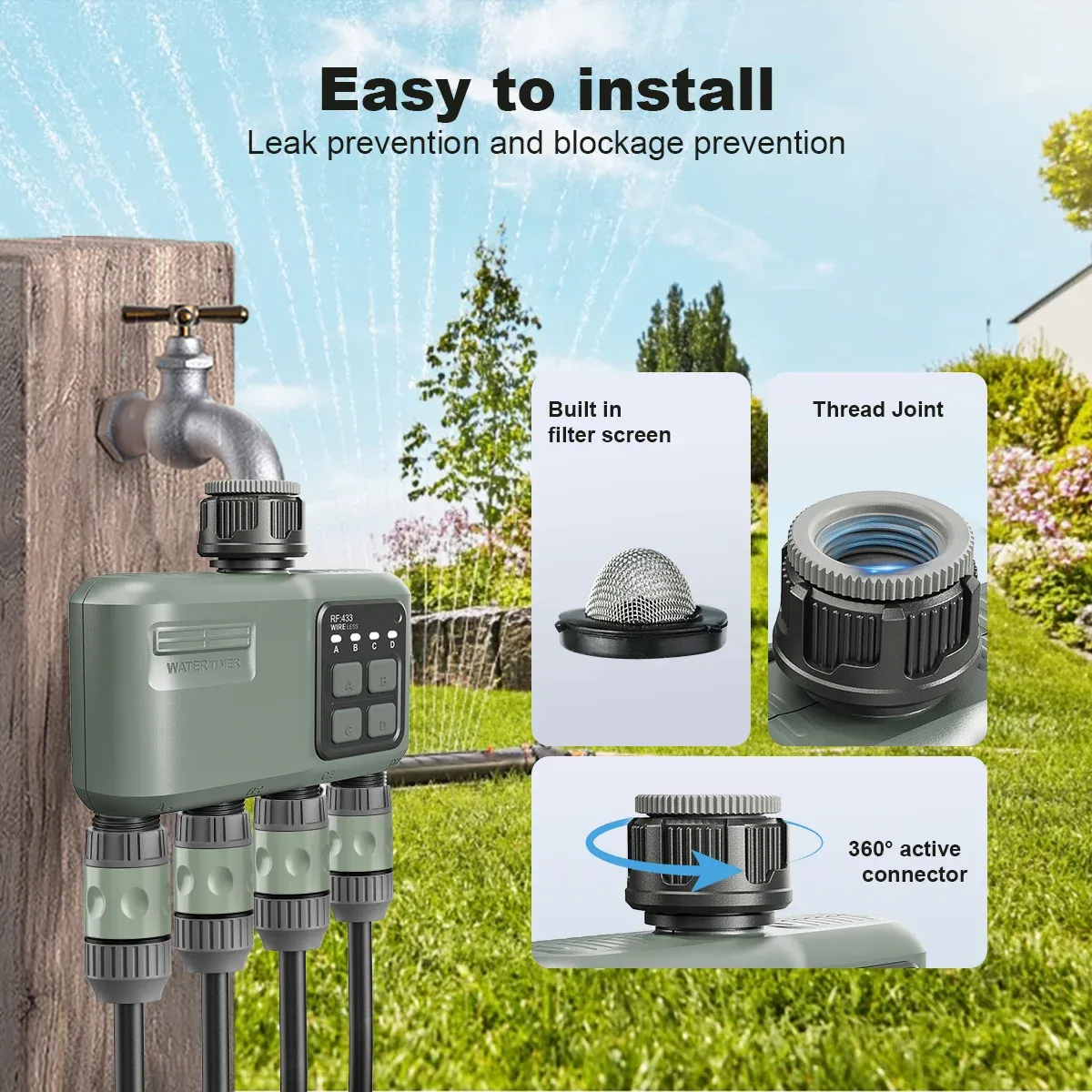
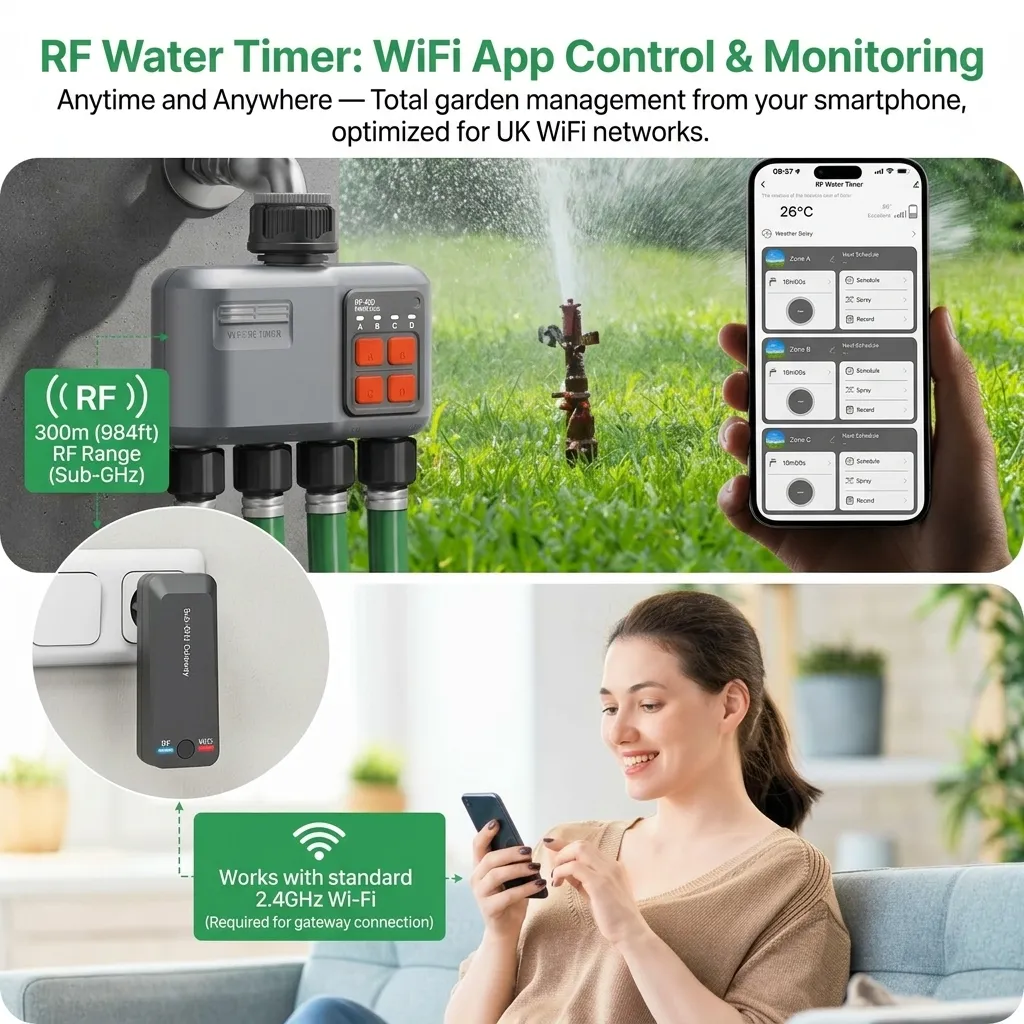
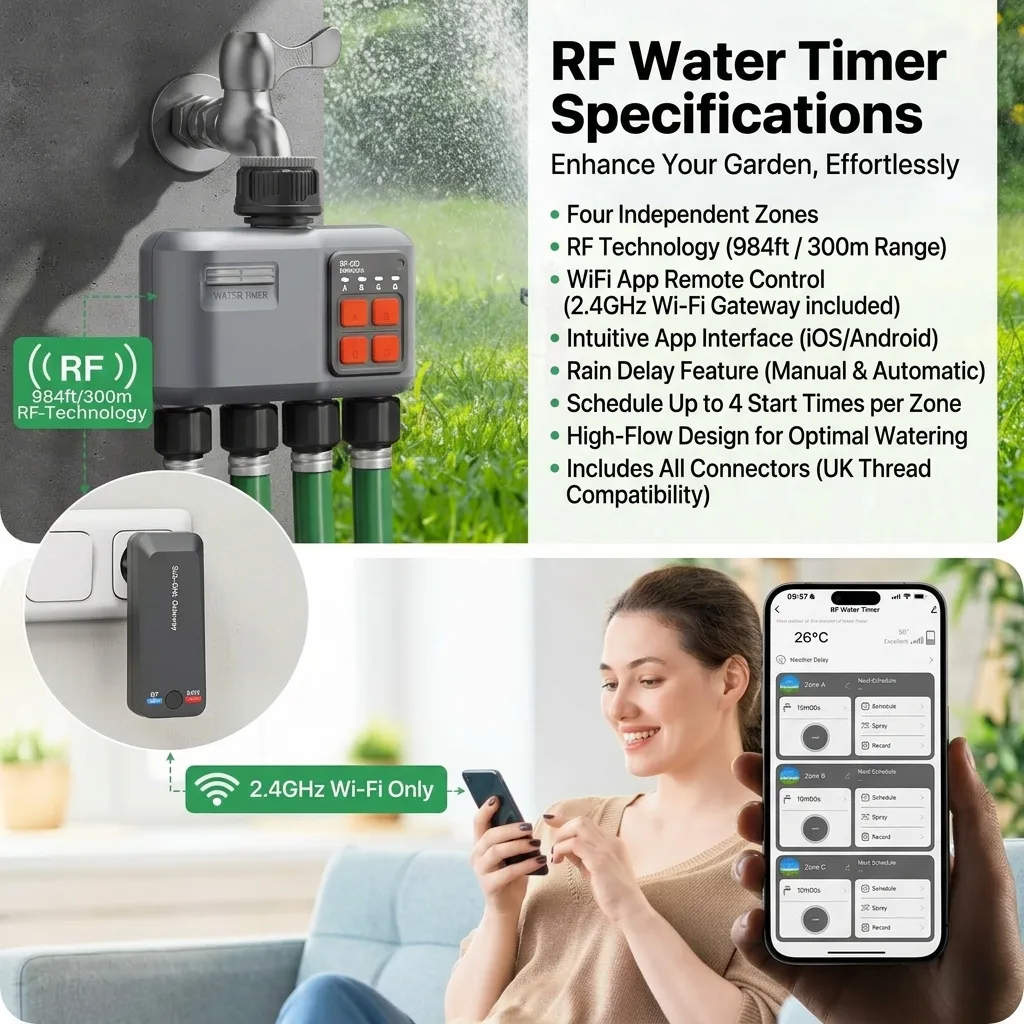
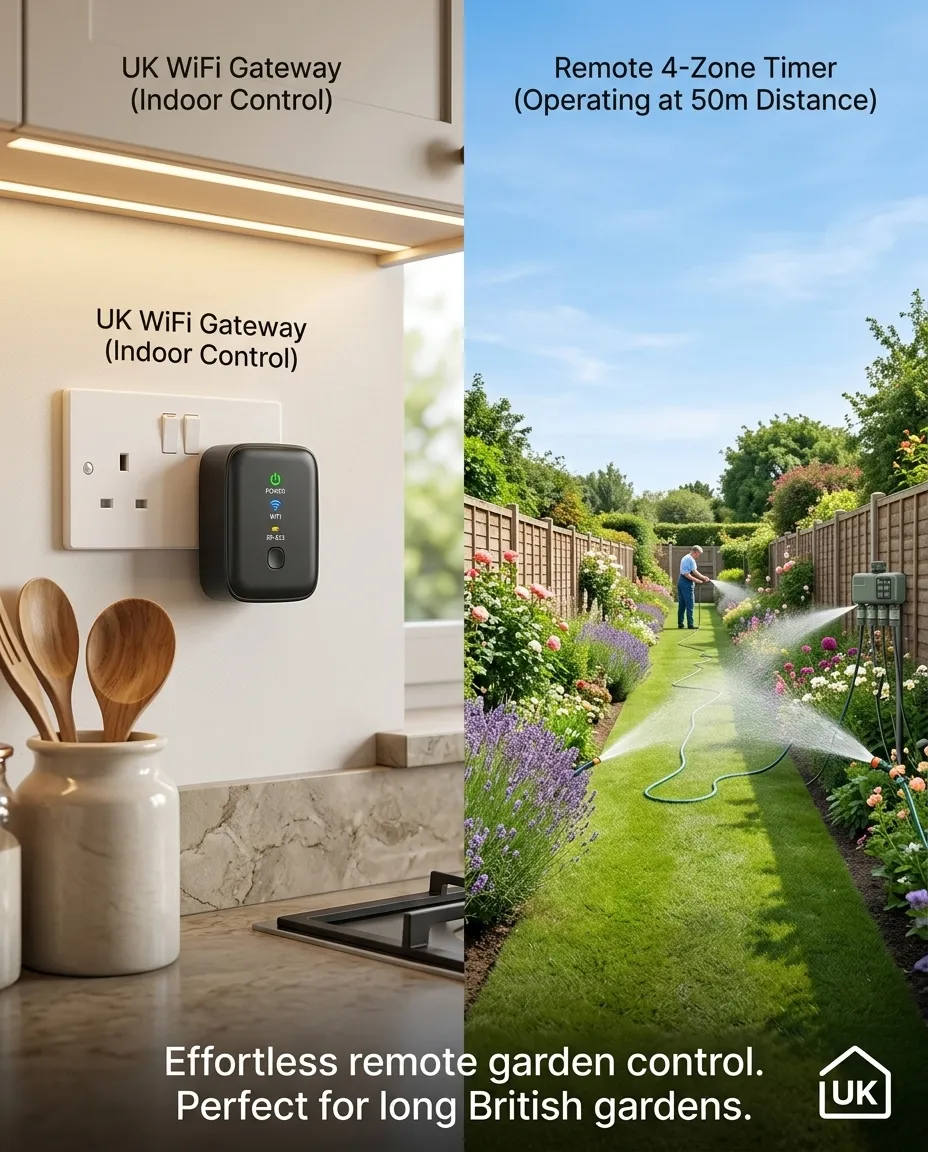
Newer smart options connect via Wi-Fi or Bluetooth, letting you adjust schedules from your phone. The johgee water timer app approach to scheduling — where you set zones and durations remotely — applies the same logic here. You're controlling when energy flows, whether that's water to your garden or electricity to your tank. The sub-GHz vs Wi-Fi connectivity debate is relevant too; some smart immersion controllers use similar RF technology for reliability through thick walls.
The key point: your hot water cylinder retains heat for hours. A well-insulated tank loses only 1–2°C per hour. Heat it during cheap off-peak hours, and you've got hot water well into the afternoon without spending peak-rate money.
Types of Water Heater Timer Switch Available in the UK
There are three main categories, each suited to different budgets and technical confidence levels., a favourite among Britain’s tradespeople
Mechanical Segment Timers
The old faithful. A 24-hour dial with pins you push in or pull out. Costs between £15 and £25. No batteries needed, no Wi-Fi required. They'll run for years without fuss. The downside? You can't set different schedules for different days without manually adjusting the pins. And they're only accurate to about ±15 minutes.
Digital Programmable Timers
These range from £25 to £50 and offer 7-day programming with multiple on/off events per day (typically 4–6 switching cycles). LCD displays show current time and programme status. Most run on a backup battery so they don't lose settings during power cuts. Accuracy is usually ±1 minute.
Smart Wi-Fi Immersion Controllers
The premium option at £50–£80. Full app control, energy monitoring, holiday modes, and integration with smart home systems. Some learn your usage patterns over time. Worth the extra spend? If you're on an agile tariff where prices change every 30 minutes, absolutely. The ability to shift heating to the cheapest half-hours automatically pays for itself fast.
Well, actually, there's a fourth type — boost timers that give you a fixed 1-hour or 2-hour burst. These are supplementary rather than primary controllers, handy for topping up when you've got unexpected guests.
Timer Switch Comparison: Features and Specs
Here's a breakdown of what each type offers. I've included typical specs based on popular UK models available as of spring 2026.
| Feature | Mechanical Segment | Digital Programmable | Smart Wi-Fi Controller |
|---|---|---|---|
| Price Range | £15–£25 | £25–£50 | £50–£80 |
| Max Load (Amps) | 16A (3.6kW) | 16A–20A (up to 4.6kW) | 16A (3.6kW) |
| Switching Cycles/Day | 48 (every 15 min) | 4–6 programmable | Unlimited via app |
| Accuracy | ±15 minutes | ±1 minute | ±1 second |
| 7-Day Programming | No | Yes | Yes |
| Remote Control | No | No | Yes (app/voice) |
| Energy Monitoring | No | No | Yes (kWh tracking) |
| Power Cut Backup | Mechanical (no loss) | Battery (72hr typical) | Cloud-stored settings |
| Installation Difficulty | Easy (plug-in or hardwired) | Moderate | Moderate to complex |
| Lifespan | 8–12 years | 5–8 years | 5–7 years |
For most households running a standard 3kW immersion element, a digital programmable timer hits the sweet spot between cost and functionality. If you're already using a johgee water timer for garden automation, you'll find the scheduling logic familiar — set it, forget it, save money.
How to Choose the Right Timer for Your Setup
Not every timer suits every installation. Here's what to check before buying.
Check Your Immersion Heater's Wattage
Most UK domestic immersion heaters are 3kW, drawing about 13A on a 230V supply. Some older or larger cylinders use dual elements totalling 6kW, though. Your timer must handle the amperage. A 16A-rated timer works for a single 3kW element. Anything higher needs a 20A or contactor-based solution., meeting British quality expectations
Hardwired vs. Plug-In
If your immersion heater connects via a fused spur (the most common UK setup), you'll need a hardwired timer that fits into the existing wiring. Plug-in timers only work if your heater uses a standard 13A plug — rare for immersion heaters but common for portable water heaters.
Your Electricity Tariff Type
This matters more than people realise. On Economy 7, your off-peak window is typically 7 hours overnight (usually midnight to 7am, though it varies by region). Programme your timer to heat water during those hours only. Economy 10 gives you an additional afternoon off-peak window. Agile tariffs need a smart controller that responds to real-time pricing.
Cylinder Insulation Quality
Got a modern factory-insulated cylinder? Brilliant — it'll hold temperature for 12+ hours. Older bare copper cylinders with a jacket lose heat much faster, so you might need a second heating window in the afternoon. Check by feeling the outside of your tank 6 hours after heating. If it's still warm to the touch, your insulation is decent. (If it's stone cold by lunchtime, that's a sign the jacket needs replacing — a cheap fix that compounds your timer savings nicely.)
Installation Tips and Safety Considerations
A water heater timer switch connects to a circuit carrying significant current. This isn't a job to bodge.
Do You Need an Electrician?
For hardwired installations — yes, unless you're competent with electrical work and understand Part P of the Building Regulations. The Health and Safety Executive is clear: work on fixed electrical installations in dwellings should be carried out by a competent person. In practice, replacing a like-for-like timer in an existing fused spur is straightforward for a confident DIYer. Adding a new timer where none existed before? Get a qualified sparky. Expect to pay £60–£120 for installation.
Wiring Basics
The timer sits between the fused spur and the immersion heater. Live, neutral, and earth connections on both the supply side and the load side. Double-check the fuse rating — it should be 13A for a 3kW element. Always isolate the circuit at the consumer unit before touching any wiring.
Positioning
Mount the timer where you can easily read and adjust it. Near the hot water cylinder is ideal, but keep it away from direct heat and moisture. The airing cupboard door frame is a popular spot. Ensure there's adequate ventilation around the unit — timers generate a small amount of heat themselves.
Look, I know some folk just want to crack on and fit it themselves. If that's you, at minimum use a voltage tester to confirm the circuit is dead before you start. I've heard too many stories from mates who assumed the switch was off. Don't be that person., popular across England
For product safety standards, check that any timer you buy carries a BSI Kitemark or CE/UKCA marking. Cheap imports without proper certification aren't worth the risk on a high-current circuit.
Smart Scheduling: Getting the Most from Off-Peak Tariffs
Fitting a timer is only half the job. Programming it properly is where the real savings happen.
Recommended Schedules by Tariff Type
Economy 7 (standard): Set your timer to run from 00:30 to 04:30. Four hours is enough to fully heat a 120-litre cylinder from cold. If your household uses a lot of hot water, extend to 05:30.
Economy 10: Split your heating — 3 hours overnight (01:00–04:00) and 1.5 hours during the afternoon off-peak window (typically 13:00–16:00, check with your supplier).
Flat-rate tariff: Even without off-peak pricing, a timer saves money by preventing unnecessary heating. Programme 2 hours in the morning (05:00–07:00) and 1 hour in the evening (17:00–18:00). That covers most households' hot water needs.
Seasonal Adjustments
Water enters your cylinder colder in winter — around 6°C vs. 15°C in summer. You'll need roughly 30% more heating time in January than July to reach the same stored temperature. A good digital timer lets you save seasonal programmes. My experience? I adjust mine twice a year — October and April. That's enough.
The Holiday Mode Advantage
Going away for a week? Smart controllers let you disable heating entirely from your phone. Even a basic digital timer can be switched off manually. There's no point heating water in an empty house. A fortnight's holiday with the immersion left running wastes approximately £18–£31 depending on your tariff. The rain skip logic used in garden watering timers applies a similar principle — don't use energy when conditions don't require it.
No timer (24hr running): ~£2,150/year
With timer (4hr off-peak Economy 7): ~£438/year
Potential saving: £1,712/year
Those numbers assume sole reliance on an immersion heater. If you've got a gas boiler as primary and use the immersion as backup, savings will be proportionally smaller but still significant — typically £80–£200 per year just by preventing accidental all-day running., with availability in Scotland
Frequently Asked Questions
How much can a water heater timer switch save on my electricity bill?
A timer switch typically saves between £150 and £1,700 per year depending on your current usage pattern and tariff. Households running a 3kW immersion heater continuously can save the most by restricting operation to 3–5 off-peak hours daily. Even homes using immersion as backup save £80–£200 annually by preventing unintended all-day heating.
Can I install a water heater timer switch myself?
Replacing an existing timer on a fused spur is manageable for competent DIYers who can safely isolate circuits. New installations should be done by a Part P qualified electrician, typically costing £60–£120. Always verify the circuit is dead with a voltage tester before starting any work, and ensure your timer carries UKCA or BSI certification.
What's the best time to run my immersion heater on Economy 7?
Set your timer to run between 00:30 and 04:30 for a standard 120-litre cylinder. This 4-hour window heats water fully at the off-peak rate of approximately 10p/kWh rather than the peak rate of 24.5p/kWh. Check your supplier's exact off-peak hours as they vary by region — some start at 11pm, others at midnight.
Will a timer switch work with my existing immersion heater?
Yes, provided you match the timer's amp rating to your heater's draw. A standard 3kW immersion heater draws 13A, so any 16A-rated timer works. Dual-element systems drawing more than 16A need a 20A timer or a contactor relay setup. Check your heater's data plate for exact wattage before purchasing.
Is a smart immersion controller worth the extra cost over a basic timer?
Smart controllers (£50–£80) justify their cost if you're on an agile tariff with variable pricing, travel frequently, or want energy usage data. They can automatically heat water during the cheapest 30-minute slots, potentially saving an extra £50–£100 annually compared to fixed-schedule timers. For standard Economy 7 users, a £30 digital timer does the job perfectly well.
How long does a hot water cylinder stay warm after the timer switches off?
A modern factory-insulated cylinder loses approximately 1–2°C per hour, meaning water heated to 60°C at 4am will still be around 48–50°C by midday. Older cylinders with external jackets lose heat faster — roughly 3–4°C per hour. If your water is lukewarm by early afternoon, consider adding a second short heating window or upgrading your cylinder's insulation.
Key Takeaways
- Immediate payback: A water heater timer switch costing £15–£80 typically pays for itself within the first month of use through reduced electricity consumption.
- Off-peak is key: Economy 7 users save up to £1.31 per day by shifting all immersion heating to the overnight off-peak window (approximately 10p/kWh vs. 24.5p/kWh).
- Match the rating: Always choose a timer rated at 16A or above for a standard 3kW immersion heater — undersized timers are a fire risk.
- Digital beats mechanical: For £10–£25 more, digital programmable timers offer 7-day scheduling, ±1 minute accuracy, and multiple daily switching cycles.
- Smart controllers suit agile tariffs: If your electricity price changes every 30 minutes, a Wi-Fi-connected controller can automatically chase the cheapest slots.
- Professional installation recommended: Hardwired timer installation on a fused spur should be done by a qualified electrician (£60–£120) unless you're experienced with electrical work.
- Seasonal adjustment matters: Increase heating time by approximately 30% in winter months when incoming water temperature drops from 15°C to 6°C.
Fitting a water heater timer switch is one of the simplest, most cost-effective energy upgrades available to UK homeowners in 2026. Whether you go for a £20 mechanical dial or a £70 smart controller, the principle is the same: heat water only when you need it, ideally when electricity is cheapest. I'd recommend starting with a mid-range digital timer if you're unsure — it's decent bang for your buck and you'll see the savings on your very first bill. Sorted.
Ready to try Johgee Irrigation?
Shop Now — £89.00