The First Frost Kills More Water Timers Than Anything Else: Your October Routine (and Our Site-Wide Reminder)
Frost split valves are the top cause of dead water timers each spring. The 15-minute October routine that prevents it, and when to do it in the UK.
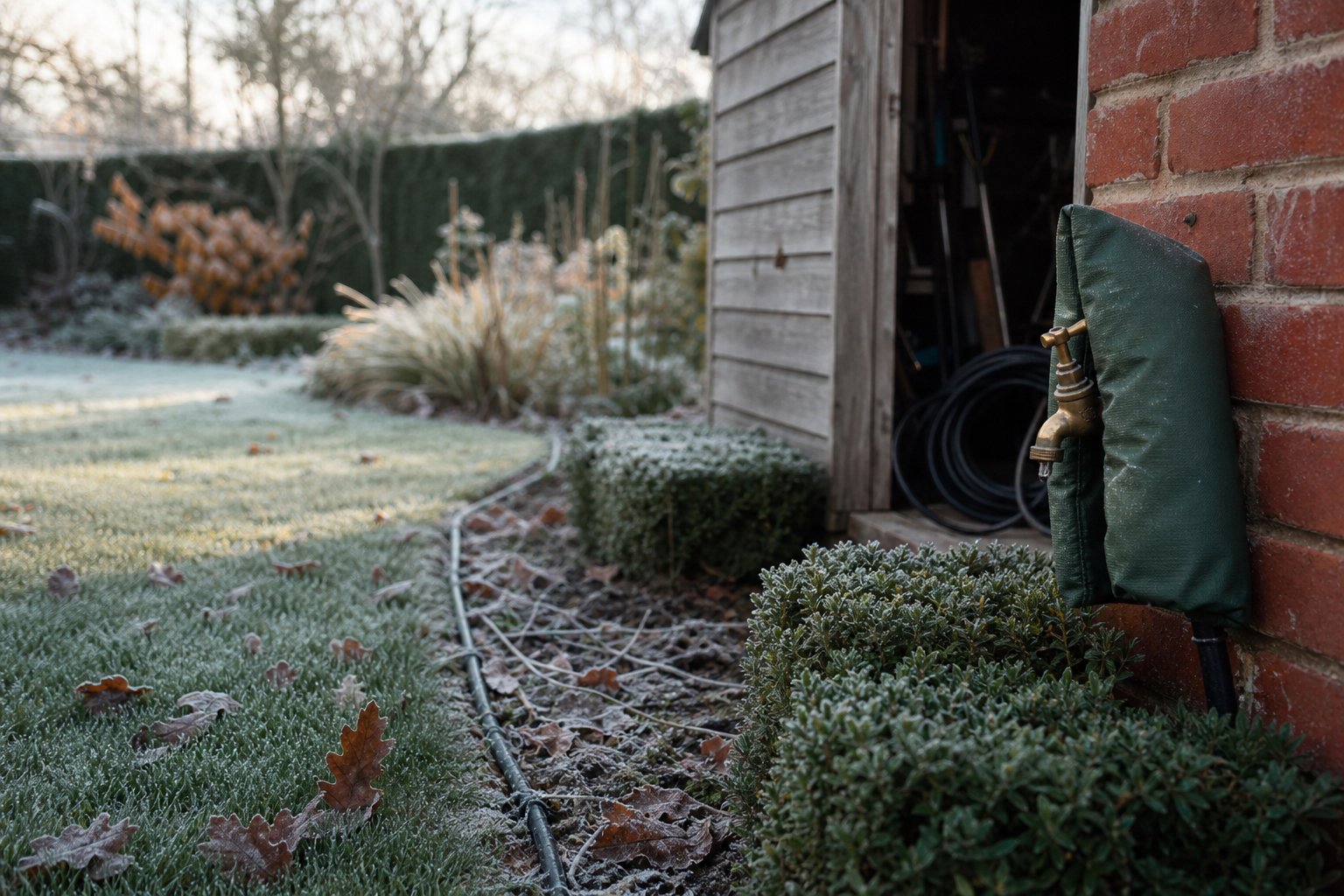
Frost is the single most common killer of garden water timers in the UK: water trapped inside the valve body expands as it freezes and splits seals, housings and manifolds — damage you discover only when you refit the timer in April and it leaks from day one. The prevention takes about fifteen minutes, once, in mid-autumn: take the timer off, drain it, store it indoors, and insulate the tap.
Why spring leak reports are really autumn mistakes
Every brand of tap timer — cheap or premium, smart or dial — shares one weakness: a valve chamber that holds a few millilitres of water after the last run of the season. Water expands roughly 9% when it freezes. Inside a rigid plastic or brass chamber, that expansion has nowhere to go except through a seal or the housing itself. The failure is silent; nothing looks wrong in November. The timer simply weeps or gushes at first use in spring, and the review gets written that week (“worked one season, leaked the next”). Gardeners on r/gardening ask every autumn how to protect timers left outside — the honest answer is that no outdoor wrapping fully substitutes for taking it in.
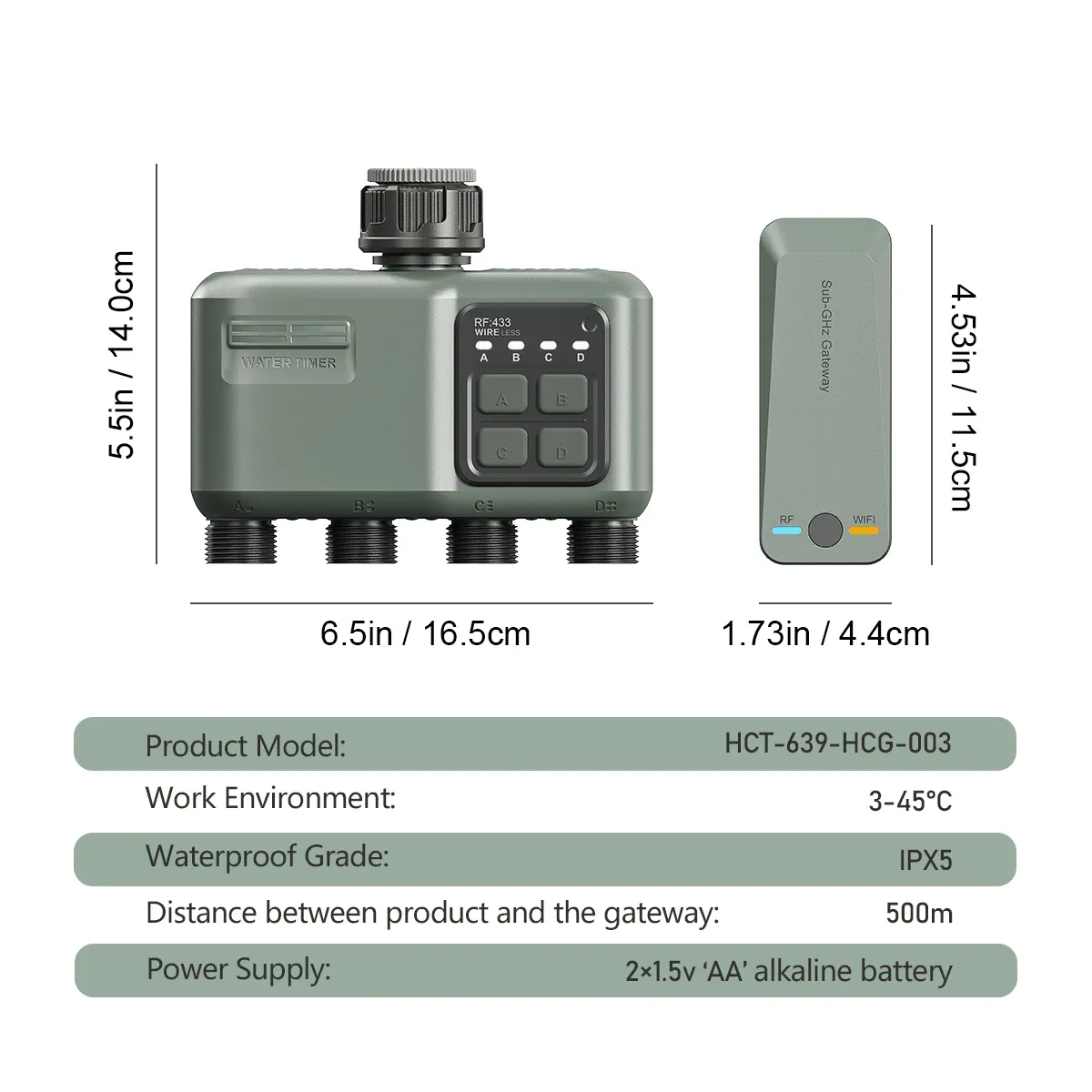
This is also why we treat frost care as a trust issue, not an upsell: an IPX5 splash-rated outdoor unit like the Johgee timer shrugs off British rain all summer (specifications), but splash-resistance and freeze-resistance are different physics. Rain hits the outside; ice forms on the inside.
The 15-minute October routine
- Pick the date by forecast, not the calendar. Do it before the first forecast air frost — mid-October for most of England and Wales, late September for Scotland, the North and frost-pocket valleys.
- Run each zone briefly one last time, then shut the outside tap fully.
- Unscrew the timer (and any splitter manifold — fittings guide here).
- Drain it properly: hold each outlet downward, press the manual open for each zone so both sides of every valve empty, and shake gently. A valve opened while draining releases the trapped chamber water that causes the classic spring split.
- Pull the batteries (they leak in cold storage), wipe the unit dry, and store it in a shed drawer or garage — anywhere frost-free. The indoor WiFi gateway stays where it is; it’s already indoors and unaffected.
- Drain the lines: open the ends of drip lines and let them empty downhill; blow-out is unnecessary for surface drip at UK depths.
- Insulate the tap with a foam tap cover, and — the step everyone forgets — locate your inside stopcock now rather than during a burst.
- Set a March reminder to refit with fresh batteries and run a leak check at each joint.
Buried supply lines, pumps and butt systems follow the same drain-first principle — if you run a pump, isolate and drain the water butt pump head too, since a rigid pump body holds water just like a valve chamber.
“Can’t I just leave it out with a cover on?”
An insulated pouch delays freezing during a light overnight frost; it does not protect through a minus-five week, because there is no heat source inside the pouch to preserve. If removal is genuinely impossible (allotment taps far from home, for instance), then: drain the timer in place via the manual-open trick, wrap valve body and tap together, and accept the residual risk. But the drawer costs nothing and works every time. It also resets the honest expectations game: a timer that spends winters indoors lasts multiple seasons; one left on the tap year-round in the UK often doesn’t — whatever the brand.
The reminder block we now run site-wide
From this month, every guide on this site carries a short seasonal footer between October and December. Here it is, for the curious (and for anyone who wants to copy the habit for their own allotment noticeboard):
❄ Before the first frost: unscrew your tap timer, open each valve to drain it, pull the batteries and store it indoors — trapped water splits valves when it freezes. Tap covers on; stopcock located. Fifteen minutes now saves a leaking spring. Come spring, reverse it with the spring recommissioning checklist.
Why announce a footer? Because the pattern in support conversations is unambiguous: people don’t seek out winterising articles in July, and by the time they’d search for one in November, the frost may already have done its work. Putting the reminder where summer readers already are — the holiday-watering and ban-compliance guides — is the only version that arrives on time.
Quick answers
Will one light frost kill a timer left on the tap? Often not — brief grass frosts may leave valve internals above zero. It’s the first proper air frost or a frozen tap feeding it that does the damage. Don’t gamble a season’s timer on the difference.
Do I need to drain the drip lines too? Surface drip lines survive most UK winters if their ends are opened to drain; the vulnerable parts are rigid bodies full of trapped water — timers, PRVs, filters, pump heads. Take those indoors.
What about the gateway and my schedules? The gateway stays plugged in indoors; your zone schedules are remembered. In spring you refit the timer and it resumes as configured — check the FAQ hub for the refit checklist.
Is frost damage covered by warranty? Freeze-split housings are wear-and-tear from an unwinterised installation rather than a manufacturing defect — which is the industry-standard position, and exactly why this page exists. Fifteen minutes in October is the best warranty extension money can’t buy.
Get 10% off your first order. Join the email list for a genuine 10% first-order code — plus a single seasonal email in October that says, simply: “frost is coming this week where you are; drain the timer.” The useful kind of marketing.
Ready to try Johgee Irrigation?
Shop Now â £84.99