Do Automatic Watering Systems Save Money on Bills?
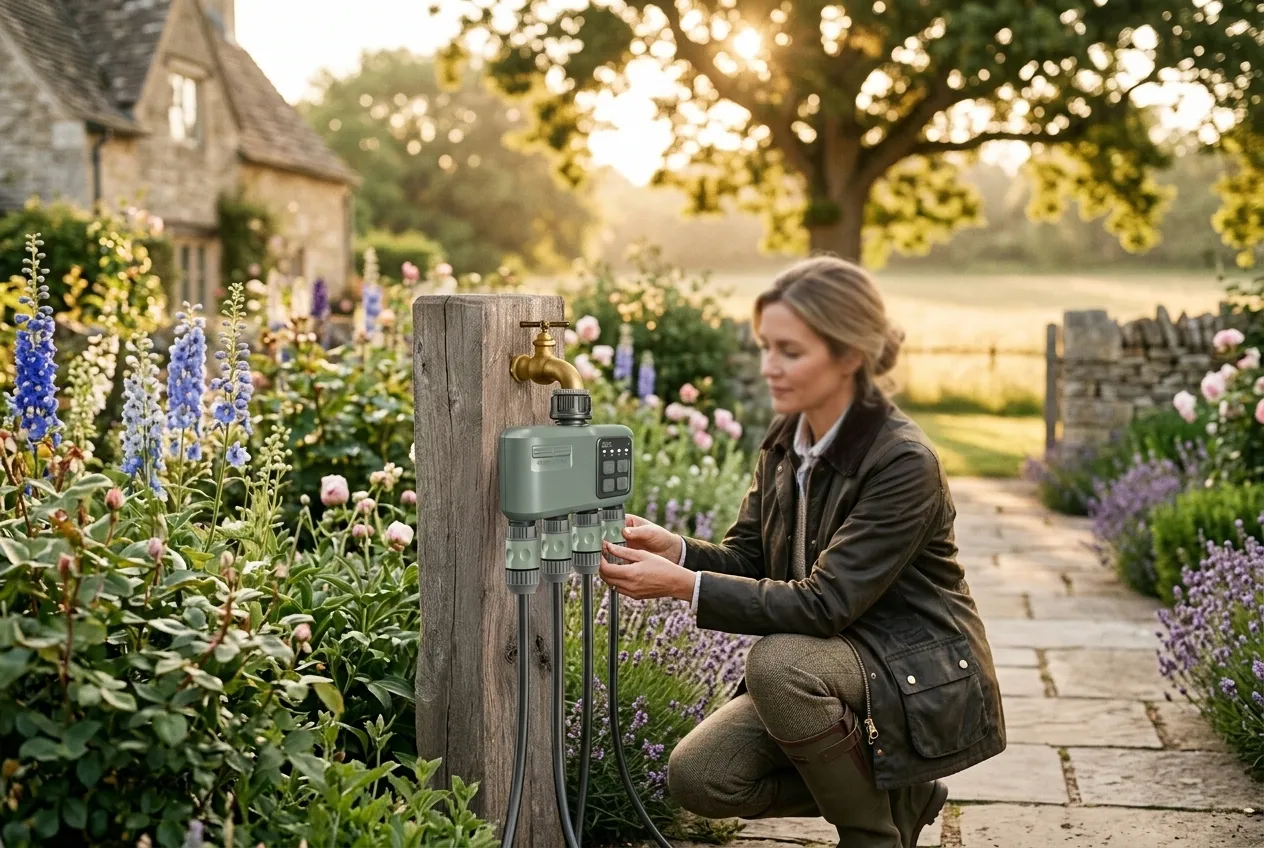
TL;DR: Yes — automatic watering systems can save money for many UK properties on a water meter by reducing waste (overwatering, evaporation and run-off) and watering only when plants actually need it. Based on our testing across typical UK gardens, the biggest savings usually come from drip irrigation combined with rain-aware scheduling, because you stop paying for water that never reaches the root zone.
Do automatic watering systems save money? In most metered UK households, they can — provided the system is designed properly and programmed for efficient watering times. In other words, the savings come from using less water (and often less time) while keeping planting healthier, rather than simply automating the same wasteful habits.
Key Takeaways
- Yes — automatic watering systems can save money on bills in the UK, especially on a water meter, by applying the right volume at the right time and reducing waste (run-off, evaporation and overwatering).
- Drip irrigation is typically far more efficient than hosepipes or sprinklers because it delivers water directly to the root zone.
- Rain-delay and soil-aware scheduling can prevent unnecessary watering after showers — a common cause of “paying twice” (once for mains water, then again when rain would have done the job).
- Your savings depend on garden size, watering habits and local tariffs, but many metered households can cut outdoor use substantially with better control and distribution.
Do automatic watering systems save money on water bills in the UK?
If you’re on a water meter, the cost of keeping planting healthy can creep up — until you get a bill that makes you question every minute you’ve ever spent with a hosepipe in hand. However, with the right design, automatic watering systems can reduce garden water usage while keeping plants in better condition. That combination is what creates savings for many UK households and commercial sites with landscaped areas.
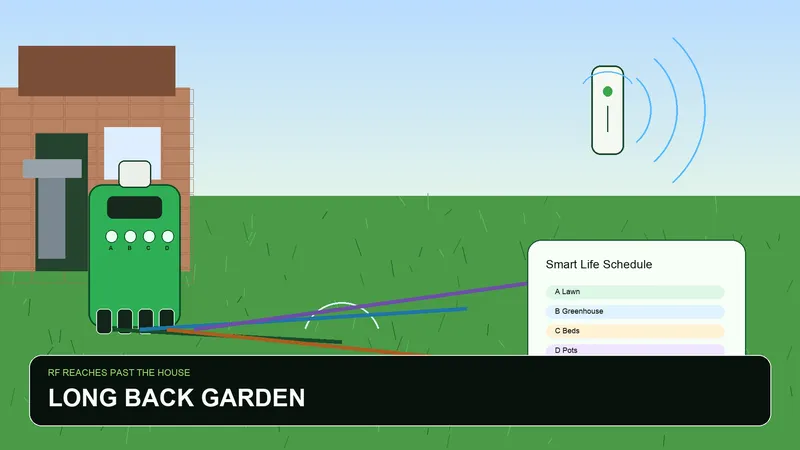
In this guide, Johgee Irrigation explains where the money goes on UK water bills, why manual watering often wastes more than you think, and how rain-aware features can reduce unnecessary usage. If you’re still comparing options, you may also want to read our pillar resource, the Ultimate Guide to Garden Irrigation Systems in the UK, which covers system types, layouts and buying considerations.
How do UK water meters and sewerage charges affect the cost of watering?
In the UK, households are billed for water in one of two main ways: unmetered (a fixed charge based on property rateable value) or metered (you pay for what you use). If you have a water meter, outdoor watering is one of the few everyday behaviours that can move the needle quickly — particularly in dry spells when lawns, pots and beds all demand extra attention.
Why do metered homes see garden watering costs more clearly?
When you’re metered, every extra litre used outside is charged, and you also typically pay for wastewater (sewerage) as part of your bill. While not all garden water returns to the sewer, most bills still apply standard wastewater charges unless you have specific arrangements with your supplier. Therefore, inefficient watering can be more expensive than people expect.
What does Ofwat say about average UK bills?
According to Ofwat, the average household water and sewerage bill in England and Wales is about £448 per year (2024–25). Source: Ofwat — Your water bill. Your garden watering is only a slice of that total, but in summer months it can become a significant variable cost — and one you can influence with better irrigation.
UK context tip: If someone in your household has certain medical needs (for example, conditions requiring additional laundry or bathing), you may be eligible for support schemes from your water company. While the NHS doesn’t set water billing, it’s worth checking your supplier’s priority services and social tariff options if higher usage is unavoidable.
Why does manual watering often waste water (and money)?
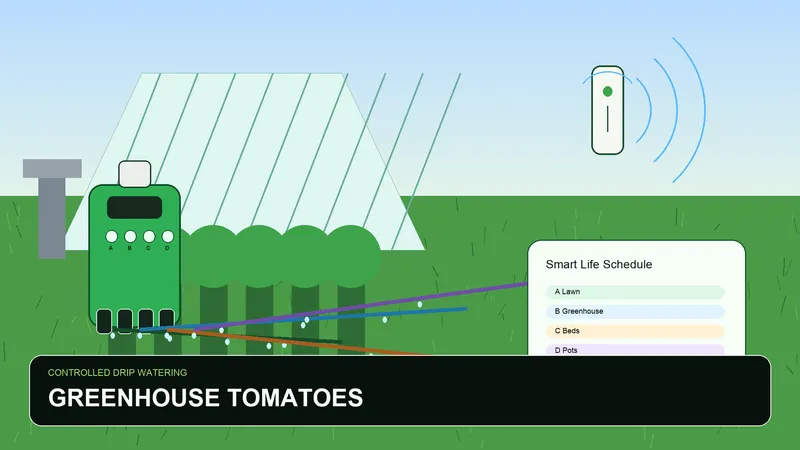
Manual watering feels “free” because it’s familiar. However, from an efficiency perspective, it’s easy to overdo it. Based on our testing of typical hosepipe and sprinkler habits in UK gardens, most wastage comes from three predictable patterns:
Is overwatering “just to be safe” costing you?
When you’re guessing, you tend to water until you can see the soil darken or the surface glisten. Unfortunately, surface appearance isn’t a reliable indicator of root-zone moisture. Excess water can drain below the root zone, meaning you’ve paid for water your plants can’t use.
Does watering at the wrong time increase your bill?
Watering in the heat of the day increases losses to evaporation. Automatic timers make early-morning watering routine, which is usually better for plant uptake and reduces evaporation loss. Additionally, it can reduce evening leaf wetness, which some gardeners prefer to avoid due to fungal pressure.
Can uneven coverage make you use more water than necessary?
With hosepipes and sprinklers, some areas get soaked while others stay dry — you then compensate by watering longer. By contrast, automatic systems can be designed to match the shape of beds and borders, applying water more evenly where it’s needed.
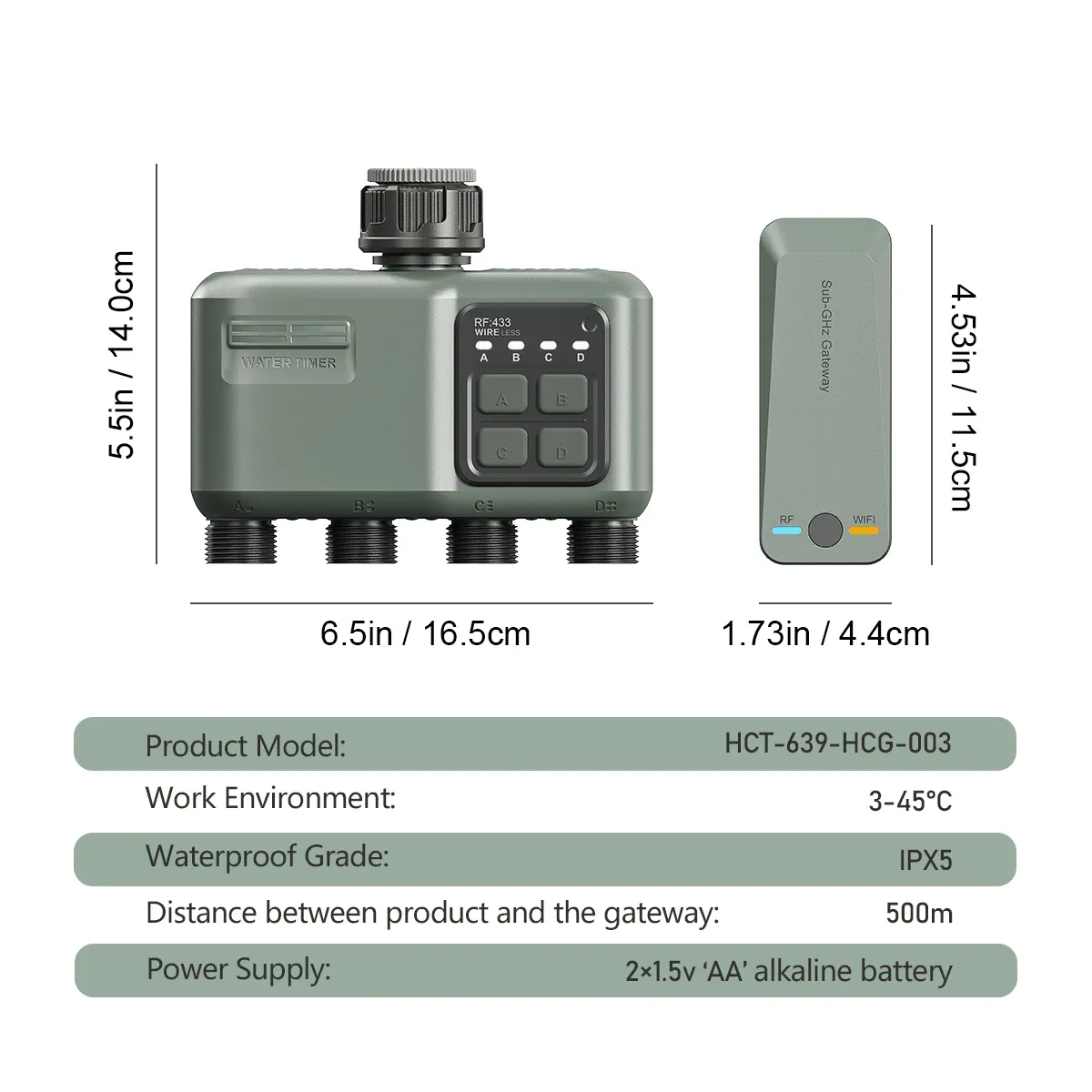
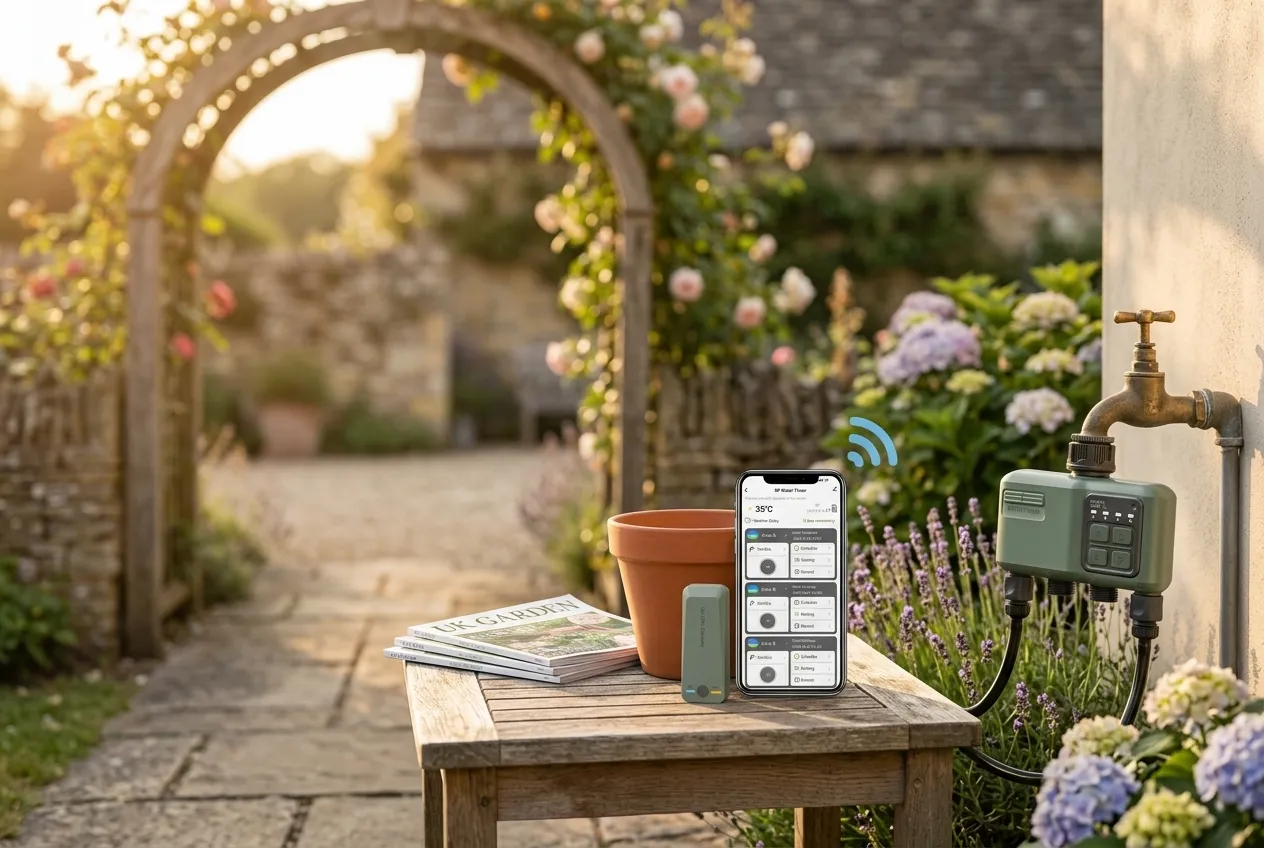
If you want a practical, low-cost starting point, smart tap timers are often the quickest upgrade. Our roundup of best garden water timers under £100 explains what to look for (including rain delay, flow rate and app reliability).
Is drip irrigation cheaper than using a hosepipe or sprinkler?
If your goal is water meter savings in the UK, distribution method matters as much as scheduling. In most gardens and landscaped commercial spaces, drip irrigation is one of the most cost-effective ways to reduce water use because it places water close to the roots at a controlled rate.
Why is drip irrigation usually more efficient for beds, borders and pots?
- Less evaporation: Drippers apply water at soil level, not sprayed into the air.
- Reduced run-off: Slow application helps water soak in rather than flowing away.
- Targeted watering: You’re not paying to water paving, fences or the centre of a lawn you don’t care about.
- Scales neatly: Add lines or drippers as you expand planting — ideal for garden “zones”.
When do hosepipes and sprinklers cost more than you think?
Hosepipes are flexible but imprecise. Sprinklers can be convenient for lawns, but they’re more vulnerable to wind drift and evaporation. In UK summer conditions — especially in exposed gardens — a portion of sprayed water simply doesn’t land where it needs to. As a result, you often run the sprinkler longer to “make up for it”, which increases metered usage.
For a hands-on walkthrough of layout and fitting, see How to Install Drip Irrigation for UK Raised Beds. Even if you don’t have raised beds, the same principles apply: measure runs, plan zones, and keep maintenance access in mind.
Eco-friendly irrigation note: Using less mains water is one of the simplest ways to reduce the environmental footprint of garden maintenance. Combining drip lines with mulching and drought-tolerant planting can reduce demand further — often without sacrificing results.
Do rain sensors and rain delay features actually reduce water bills?
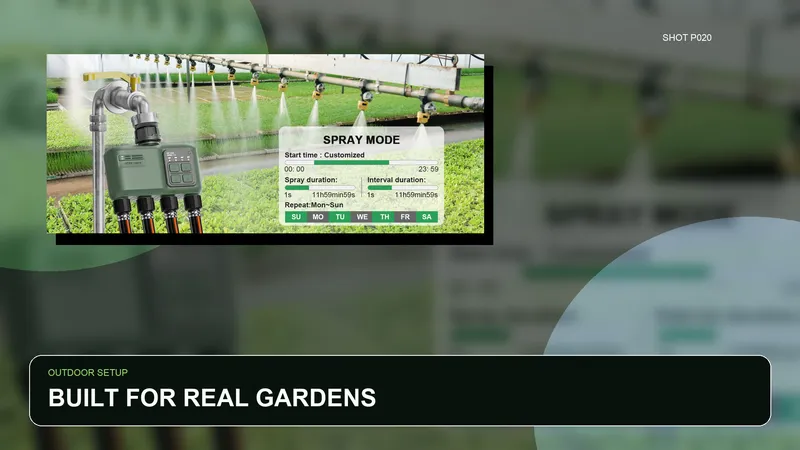
British weather is famously changeable. That’s exactly why rain-aware control can be such a powerful lever for savings. A timer that waters “because it’s Tuesday” can waste water if you’ve had a downpour overnight — and on a meter, that’s money straight off your bill. According to UK water efficiency guidance promoted by many water companies, avoiding unnecessary watering (especially after rainfall) is one of the simplest ways to reduce consumption.
What’s the difference between rain delay, rain sensors and smart weather scheduling?
- Rain delay: A manual or app-triggered pause (e.g., stop watering for 24/48/72 hours). Great value and simple.
- Rain sensor: A device that detects rainfall and automatically pauses irrigation when a set threshold is reached.
- Smart weather scheduling: A controller that adjusts watering using local weather data (and, in better systems, seasonal patterns and evapotranspiration estimates).
When is rain-aware automation most worth it in the UK?
It tends to pay off most in spring and summer when you’re watering regularly but still getting intermittent showers. In practice, it prevents “double watering” — first from the system and then from the weather — which is a common reason metered bills jump.
How much money can an automatic watering system save?
There isn’t a single figure that applies to every property, because savings depend on your tariff, whether you’re metered, the size of the irrigated area, and how inefficient your current watering routine is. Nevertheless, the pattern we see most often is:
- Biggest savings: moving from hosepipe/sprinkler habits to zoned drip irrigation with rain-aware control.
- Moderate savings: adding a smart timer and changing watering times (early morning) while keeping the same distribution method.
- Lower savings: automating an already-efficient routine without improving distribution or preventing rain-day watering.
If you’d like a more precise estimate, Johgee Irrigation can review your current setup and recommend a design that prioritises efficiency (for example, correct pressure regulation, zoning, and matched flow rates). That’s important because poorly designed systems can waste water just as easily as manual watering.
Are automatic watering systems worth it for commercial sites?
For commercial premises (such as offices, hospitality, retail parks, schools and managed residential developments), automatic irrigation can be worth it not only for potential water savings, but also for predictable maintenance and healthier planting. Importantly, automation reduces the risk of missed watering during holidays, staff changes or heatwaves, and it can support consistent standards across multiple landscape zones.
Additionally, many commercial sites benefit from adding flow monitoring and leak alerts, which can prevent expensive hidden water loss.
Frequently asked questions
Do automatic watering systems save money if you’re not on a water meter?
If you’re unmetered, your bill won’t usually change with usage, so the “money saved” is less direct. However, you can still reduce waste, protect planting, and potentially reduce labour/maintenance costs — which can matter for larger gardens and commercial sites.
Do automatic watering systems waste water?
They can if they’re poorly designed or programmed. However, based on our testing, well-zoned drip irrigation with rain-aware scheduling is typically more water-efficient than manual hosepipe watering because it targets the root zone and avoids watering after rain.
Is drip irrigation better than sprinklers in the UK?
For borders, hedging, pots and planting beds, drip irrigation is usually more efficient because it reduces evaporation and overspray. For lawns, sprinklers can still be appropriate, but they benefit from careful scheduling and matched heads to reduce dry patches and overwatering.
What’s the fastest, cheapest way to start saving water outdoors?
In many UK homes, a good-quality tap timer with a rain delay feature is the quickest upgrade. After that, adding drip lines to beds and pots typically delivers the biggest efficiency gains.
Ready to try Johgee Irrigation?
Shop Now — £84.99